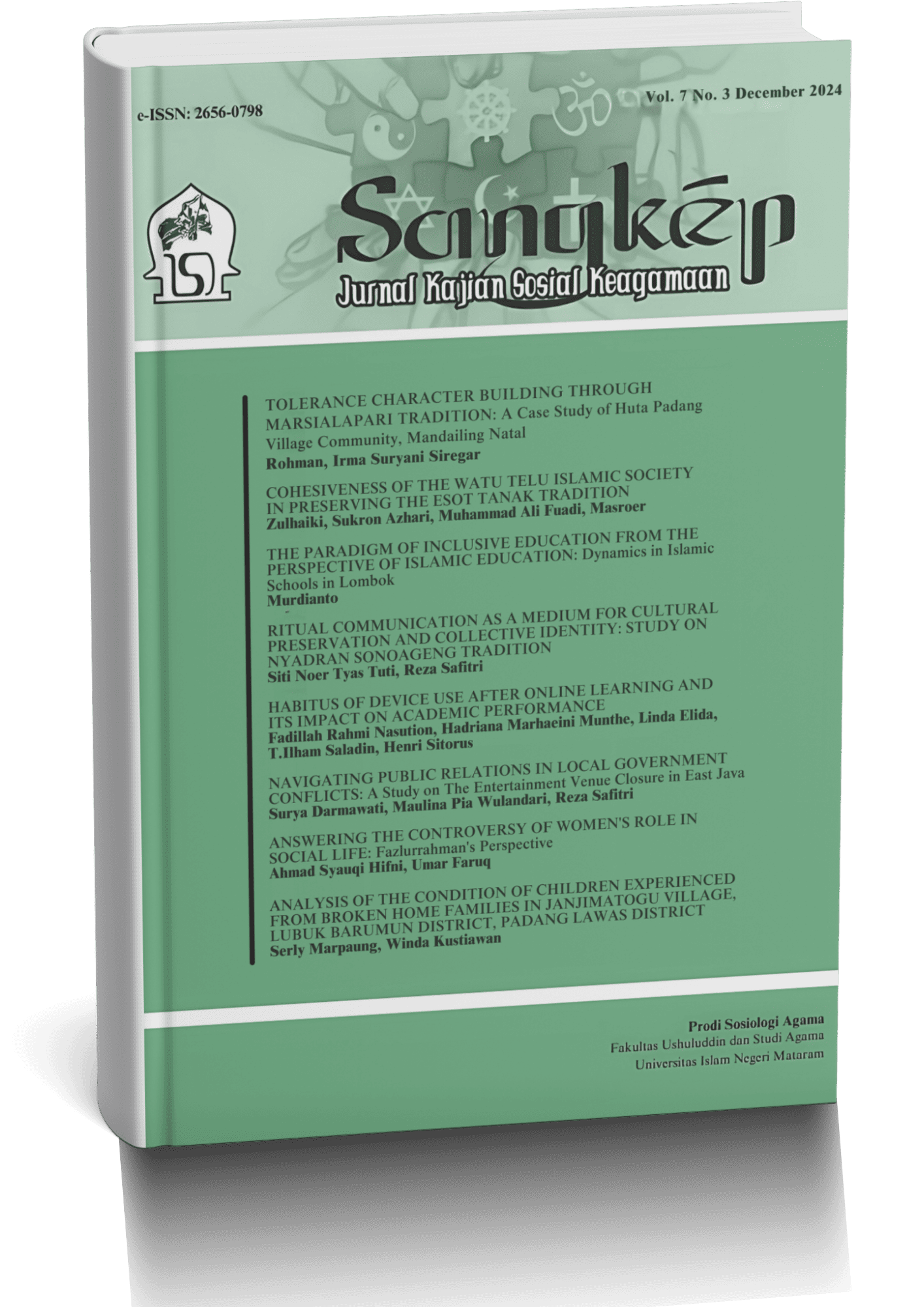
SANGKéP: Jurnal Kajian Sosial Keagamaan enlisted with e-ISSN 2656-0798 and p-ISSN 2654-6612 and published on April, August and December by the Department of Sociology of Religion Faculty of Ushuluddin and Religious Studies of Universitas Islam Negeri Mataram in collaboration with the Indonesian Religious Sociology Association (ASAGI). Sangkép is published thrice a year and nationally accredited by Ministry of Education, Culture, Research, and Technology (Kemendikbudristek), Sinta 3 Nomor: 72/E/KPT/2024 (15th May 2024). This Journal focuses on contemporary religious social issues in Indonesia, related to religious sociology, religion and local wisdom, religion and media, religion and tourism, religion and community empowerment, religion and social-economic-politics and other actual issues relevant to the focus and scope of journal.
Journal Title : SANGKéP: Jurnal Kajian Sosial Keagamaan
Language : English
Acreditation : Sinta 3 nomor: 72/E/KPT/2024
Frequency : 3 issues per year
DOI :10.20414/sangkep.v2i2.
Online ISSN : 2656-0798
Printed ISSN : 2654-6612
Publisher : UIN Mataram dan Asosiasi Sosiologi Agama Indonesia (ASAGI)
Citation Analysis : Moraref, Garuda, Google Scholar, Dimensions
Editor in Chief : Suparman Jayadi
OAI : http://journal.uinmataram.ac.id/index.php/sangkep/oai
Sangkép: Jurnal Kajian Sosial Keagamaan is licensed under Attribution 4.0 International (CC BY 4.0) 
Vol. 8 No. 3 (2025): The Interconnection of Communication, Identity, and Social Justice in a Multicultural Context

These articles delve into various facets of communication within multicultural contexts, exploring interfaith practices, cultural diversity, and social development in Indonesia. They emphasise the importance of ethical and inclusive communication for fostering interfaith relationships, as seen in Karl-Otto Apel’s approach to interreligious dialogue and the Hindu community’s interactions in Kutai Kartanegara. The studies also highlight the role of adaptive da’wah management in shaping youth development and addressing legal challenges, such as the fulfillment of child support rights post-divorce. Furthermore, they reflect on how cultural inculturation, identity negotiation, and the integration of social and religious values contribute to social resilience. Ultimately, the findings call for more effective social and legal reforms to promote justice, inclusivity, and equity in multicultural societies, ensuring that diverse communities can coexist harmoniously and sustainably.
Published:
2025-12-09
View All Issues